The precision of dead reckoning
In the pitch black of the European night, the navigator was the beating heart of the Lancaster crew, charting courses through hostile skies with absolute mathematical precision.


Arthur William Dack
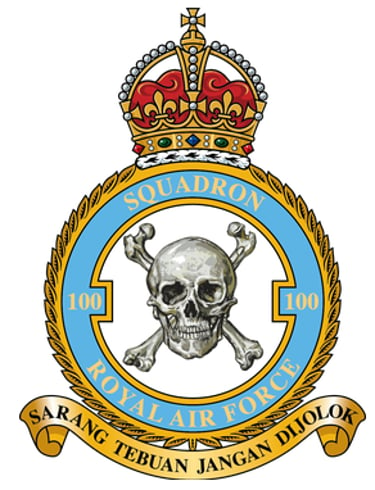
Flight Sergeant Arthur William Dack served with distinction as a Lancaster bomber navigator in 100 Squadron. His meticulous logbook entries record the quiet, calculated bravery required to guide heavy bombers through intense flak and night fighter attacks over occupied Europe.
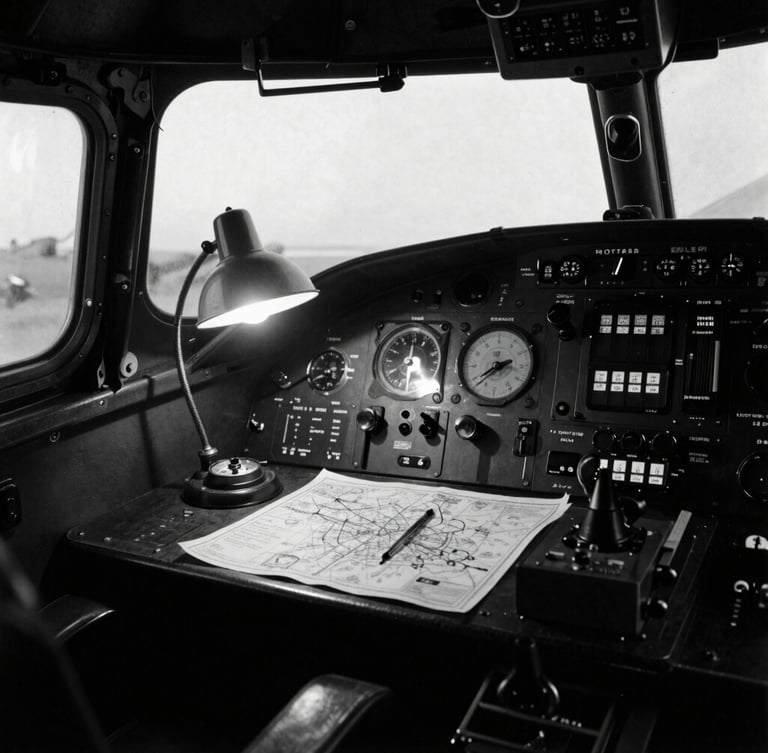
Using only a hand-held bubble sextant, a map, and a compass, navigators like Dack held the lives of seven crew members in their hands, proving that mathematical precision was as vital as any weapon.
Squadron Operations
From the formation of the squadron to the final night runs over Europe, these key operational milestones define the legacy of 100 Squadron.
Re-formation
The Night Offensive
Final Sorties
In late 1942, 100 Squadron re-formed at RAF Waltham, equipped with heavy Lancaster bombers to prepare for high-stakes strategic night operations over occupied Europe.
Throughout 1943 and 1944, crews flew intense night operations over hostile territory, relying entirely on dead reckoning and stellar observations to navigate the blackness.
By early 1945, the squadron completed its final wartime sorties, having flown thousands of operational hours with unmatched navigational precision and quiet bravery.


Archival Resources
For historians and descendants seeking deeper insight into the Lancaster crew dynamic and the technical mastery of wartime navigation, we recommend these two volumes, ILLUSTRATED LANCASTER BOMBER - and - NAVIGATOR'S DRESDEN and the HEAVY BOMBERS
Lancaster Bomber Encyclopedia
An RAF Navigator's Perspective
This title tells the story of the greatest night bomber of World War II, illustrated with over 275 photographs. It takes you through the design, development, major battles of the war, with first-hand accounts from people who lived through the War in Germany and in Britain.
This is the story of a young man's entry into the war in 1941 and culminates in his flying on the bombing raid to Dresden in February 1945. This is not a gung-ho account of flying with Bomber Command but neither is it a breast-beating avowal of guilt.